سوگ[SOOG] BURNING GRIEF
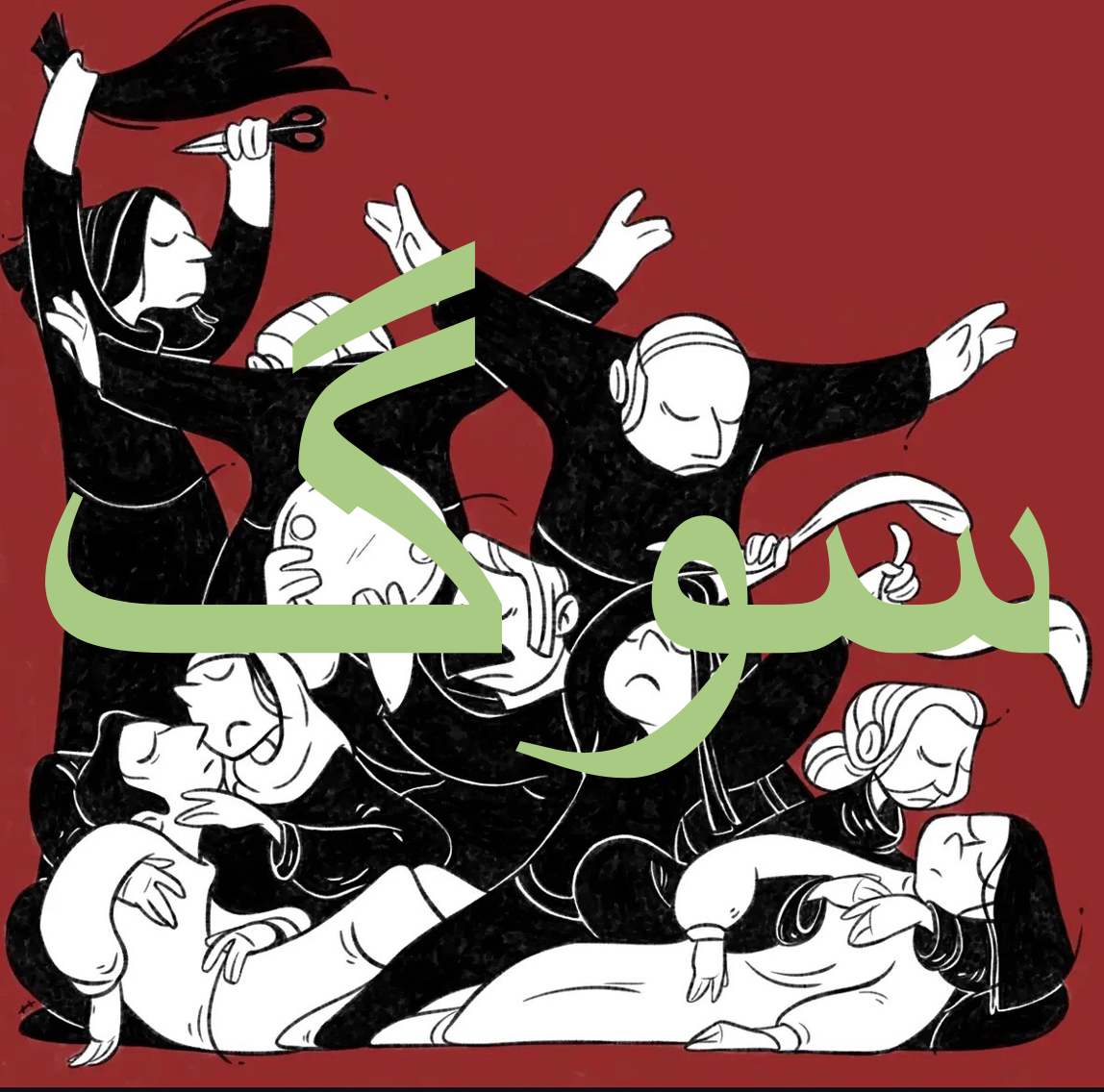
Soog, a word that has become part of my 2026 vocabulary. A word that cuts, burns and sooths at the same time. We use it in the Persian language to give name to the burning grief of the loss of a loved one. Soog is not an emotion, a passing affect, it is a state. One is in soog, as one is in love. Soog comes and takes over your body, breath – you become part of it, there is no negotiation with soog. One cannot actively do anything, the way that mourning implies an active participation on the mourner’s part. Instead, soog comes and lives inside of you, it dictates your breath, (non)movement, your personhood, you are different when soog has you– it is a holy, agonizing, deeply passionate state; it is the darkest side of love in the human-to-human experience.
We are all in soog as Iranians these months. The waves of this burning grief move through our bodies, no matter where we live on this globe. Even those who are blissfully dissociated from emotions cannot escape the tsunami of this grief that has taken over our nation’s soul since January 8 and 9. These were the two darkest days in Iranian history since Genghis Khan, where at least 50.000, but probably closer to 90.000 mostly young Iranians were killed with military grade weapons when millions of people flooded the streets demanding (once again!) an end to this tyrannical, murderous regime that is occupying the Iranian soil and soul for 47 years.
But what do these numbers of dead bodies and trails and trails of blood on the streets we grew up in do to us? As an Iranian we are plunged in darkness, in unimaginable grief that locks into paralysis of utter hopelessness. On top of that, for several weeks, we in the diaspora had no connection in any shape or form with our loved ones in Iran as the regime had cut off all forms of communication. Were they dead, alive, in prisons being tortured, beaten or raped to death? Looking at videos of slain protestors was breaking our hearts while simultaneously bringing relief that you did not recognize a loved one. I do not wish for you to be able to even imagine how that feels like.
But these weeks, what has pierced my heart the most have been the wails of mothers. Mothers who crawl into the remaining clothes or wardrobes of their sons and daughters, wailing their agony as they inhale the familiar scent of their child before it evaporates into the authority of time. Mothers who cry out from their balcony every night, pleading to God about their fate, wailing so loud from their burning heart that you want to rip your ears from your head.
And then we started seeing mothers, fathers, siblings, lovers who dance, wildly, passionately at their loved ones’ funerals. Stamp on their graves to break the enforced silence, clap their hands loudly in celebration, in passionate defiance. Funerals filled with celebratory music and dancing, dancing, crying, grieving, loves ones. If you think this is some kind of exotic custom in Iran, I have to disappoint you – it is not. Although chest beating and movements of the head are part of some traditional death dances, this dancing is not that. It is an act of resistance. It is a protest continued into the graveyard and ceremonies. The bodies of these mothers in soog are saying to the murderous regime: I will not give you the pleasure of my sorrow. I will dance, celebrate, erupt my body in joy as my heart is burning with grief. The scenes from these clips are nothing short from art; the most agonizing, real, raw, embodied form of poetry one could ever witness. These days, it goes even further as fathers and mothers are creating wedding ceremonies at the 40th Memorial Day and funerals of their loved ones.
“You ask me who is the bride of my beloved son? I will tell you, it is Lady Iran.”
Watching loved ones in black wailing while others, dressed in white, dance in celebration, rubbing sugar canes over a white veil [a wedding ritual] hovering above the grave of their loved one, is one of the most agonizingly beautiful things I have seen in my life.
Time and again, be it during the 2022 Woman, Life, Freedom uprising and the consequent crackdown, and again now, I see my people rise, fall, react, resist, erupt, and make revolution through the poetic soul of Iran. None of this is conceptual, orchestrated, or designed; it is raw, pure, undiluted Iranian pulse — love creating new life on the decaying body of this rotten regime.
We Iranians know how to make the beautiful while plunged into the darkest shades of humanity. This is our heritage, our history.
In memory of Mostafa Hozchi, killed by the IRGC on Jan 9 2026
BREATH, BONE, BLOOD: IRAN AS BODY
If you have paid attention to my writing, you can sense the body — the sensuous demand of flesh, tears, sweat, blood — in it. Through these experiences, I have come to realize that my deep connection to matter, body, and earth comes from my Iranian heritage more than from any mystical inclination, let alone Jungian training, which often lacks a real intimacy with the deep chthonic poetics of matter. Being Iranian demands that we be embodied. Through both beauty and agony, we are plunged into the (un)privileged, dark spaces of being a body. And somehow, somewhere, the soul of Iran lives in our cells, breathes thousands of years of history and identity wherever we are in this world, however long we have been exiled.
“As an Iranian, Iran is my body,” I recently read on a poetic Instagram reel. It is even in the word: vatan means homeland in Farsi, borrowed from Arabic, while tan means body and is an old Iranian word. While strictly speaking they do not share etymology, they still speak to each other in the poetics of utterance. Homeland is our home-body. No matter where we are, we cannot escape our homesickness in the diaspora. We travel with the delicate patterns of our homeland woven into the fabric of our bodies, wherever we go. This gets even more agonizing and complicated for Iranians who cannot travel back out of fear of being jailed, a fate that millions of Iranians face around the world. Our body becomes even more our homeland, like a turtle we carry the weight of our home(sickness) on our back.
This homesickness is echoed in the famous opening lines of the Masnavi by Rumi, who was himself an immigrant in Turkey, fleeing the murderous violence of Genghis Khan. Rumi wrote these lines expressing the classical Sufi mystical experience of longing in the heart for the great Beloved, God. But we cannot separate Rumi’s Iranian body from his mystical experiences. In his time, too, he was plunged into the darkness of burning soog, as hundreds of thousands of Iranians were violently massacred by the Mongols. Why would Rumi continue writing in his beloved native tongue if he had so fully adapted as an immigrant from a young age? I know that he, too, was wedded to the Iranian soul, making his experience of separation from his beloved teacher Shams even more embodied, lived, and bled.
Listen to the reed for it’s grievances
how it tells a tale of separation:
بشنو این نی چون شکایت میکند
از جداییها حکایت میکند
Ever since they cut me from the reed bed,
my wail has caused men and women to weep.
کز نِیِستان تا مرا بُبریدهاند
در نفیرم مرد و زن نالیدهاند
I want a heart that is torn open with longing
so that I might share the pain of this love.
سینه خواهم شَرحه شَرحه از فراق
تا بگویم شرح درد اشتیاق
Whoever has been parted from his source
longs to return to that state of union.
هر کسی کو دور ماند از اصلِ خویش
باز جوید روزگارِ وصل خویش
— Mowlana Rumi
For many Iranians I know, this intimate connection of land, soul and body seems to ring true. Iran lives in our blood and bones, its poetic currents gush like rivers in our veins, its majestic mountains peak in our hearts, its ancient myths and tales are the bone pillars of our body; we return to them time and again. No matter how much the occupying force of the IRGC (the now-designated terrorist regime in Iran) tried to erase our culture, it has not succeeded. Iranians remain wedded to their land and even more to the soul of Iran.
What is it that weds us so intimately to the land that our bodies, even thousands of kilometers away, still pulsate with longing for homeland? I have spent more of my life in the flat landscapes of the Netherlands, but the mountains of Iran live inside my body — in the dreams I have at night, in my imaginal body. The poetic soul of Iran moves in me involuntarily, through movement, words, and the immense longing of the heart.
If my heartbeat had a fragrance, it would be the fragrance of saffron, one of the only flowers that does not truly thrive outside Iranian soil; a flower that refused to be exported and replanted, a flower that insists on its nativity. Just like the spirit of the saffron flower, Ferdowsi — one of our great cultural heroes, if not the most beloved — wrote about this sensuous connection to the being of Iran in the most important cultural work for Iranians. In the Shahnameh all of our myths, folktales, legends, and symbols were preserved in the face of Arab/Islamic conquest, colonization, and the attempted erasure of ancient Iranian language and culture.
I will end this piece with his line, leaving the answer to my inquiry to the mystery of our beloved Iran Banoo (Lady Iran) — or perhaps to you, as you one day travel and soak in the majesty and beauty of our most beloved motherland.
To a Free Iran.
چو ایران نباشد، تنِ من مباد
“If there is no Iran, may my body not exist.”
– Ferdowsi in Shahnameh [Epic of Kings]
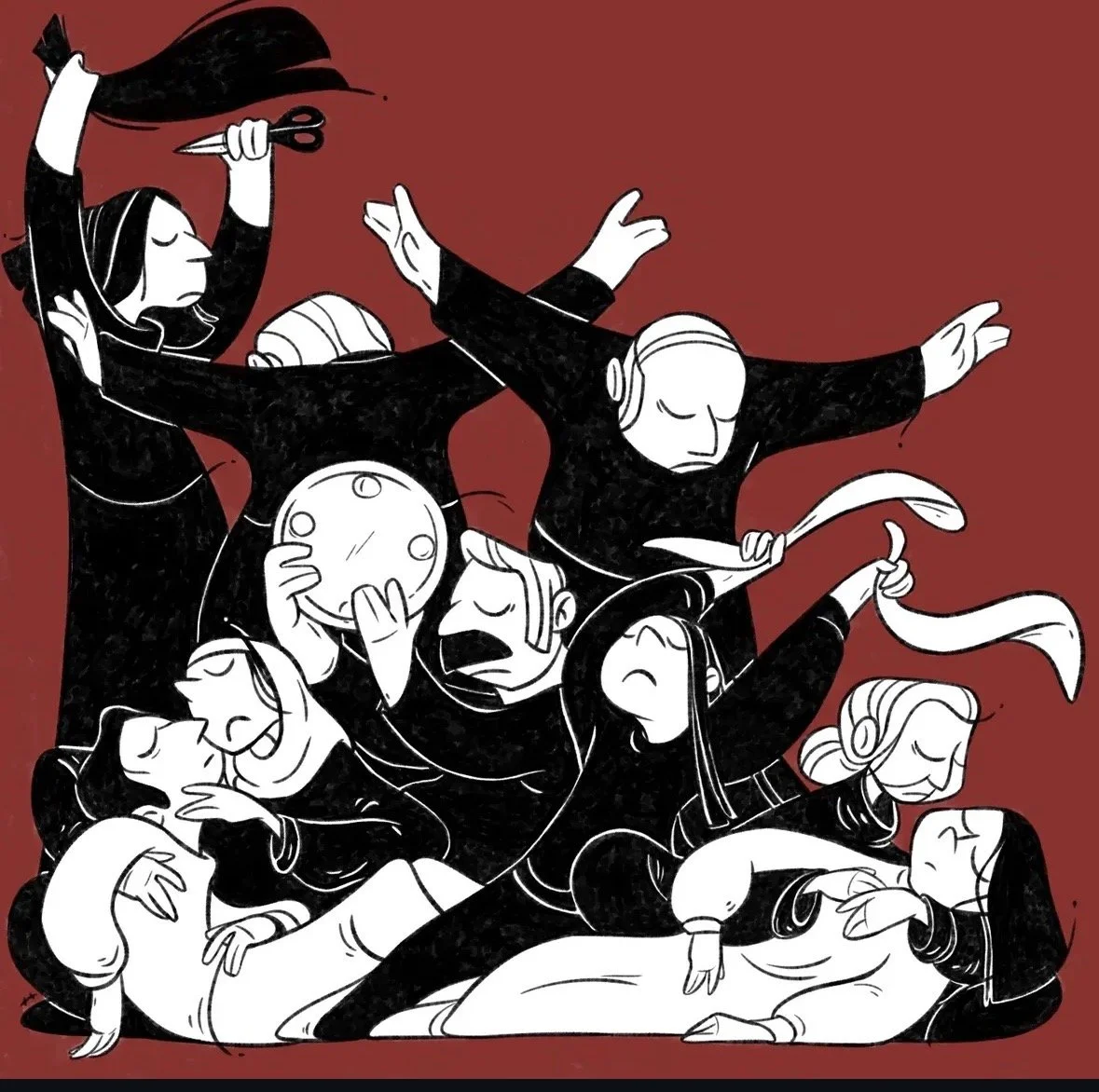
Artwork by Farinaz Soleimani